Every winter puts properties to the test…
This past season was particularly demanding. We experienced deep frost penetration, heavy snow loads, prolonged cold temperatures and repeated freeze thaw cycles. These temperature swings can occur dozens of times in a single Ontario winter, placing tremendous stress on landscaping, hardscaping and exterior property infrastructure.
As the snow melts across Durham Region and the Greater Toronto Area, many homeowners, commercial property owners and property managers begin noticing problems that were not visible just a few months ago.
After more than two decades working in landscaping and outdoor construction across Durham Region and the GTA, one thing becomes very clear every spring.
Spring is not just cleanup season.
It is inspection season.
This winter our team at JRC Landscaping and Snow was working day and night providing commercial snow removal services for plazas, industrial properties and commercial facilities across Durham Region. Because we were on these properties constantly during storms, we were able to see firsthand how this winter affected landscaping, hardscaping and exterior surfaces.
Across residential, commercial and industrial properties we saw several common issues emerging…
- Drainage systems beginning to fail
- Retaining walls under increased pressure
- Asphalt surfaces deteriorating from freeze thaw cycles
- Interlocking driveways and walkways starting to shift
- Landscape grading problems becoming visible
Winter exposes weaknesses in outdoor construction. The earlier property owners and property managers identify these issues, the easier and more cost effective they are to correct.
Here are the most important things property owners in Durham Region should be inspecting this spring…
Shifting Patios, Walkways and Interlocking Driveways
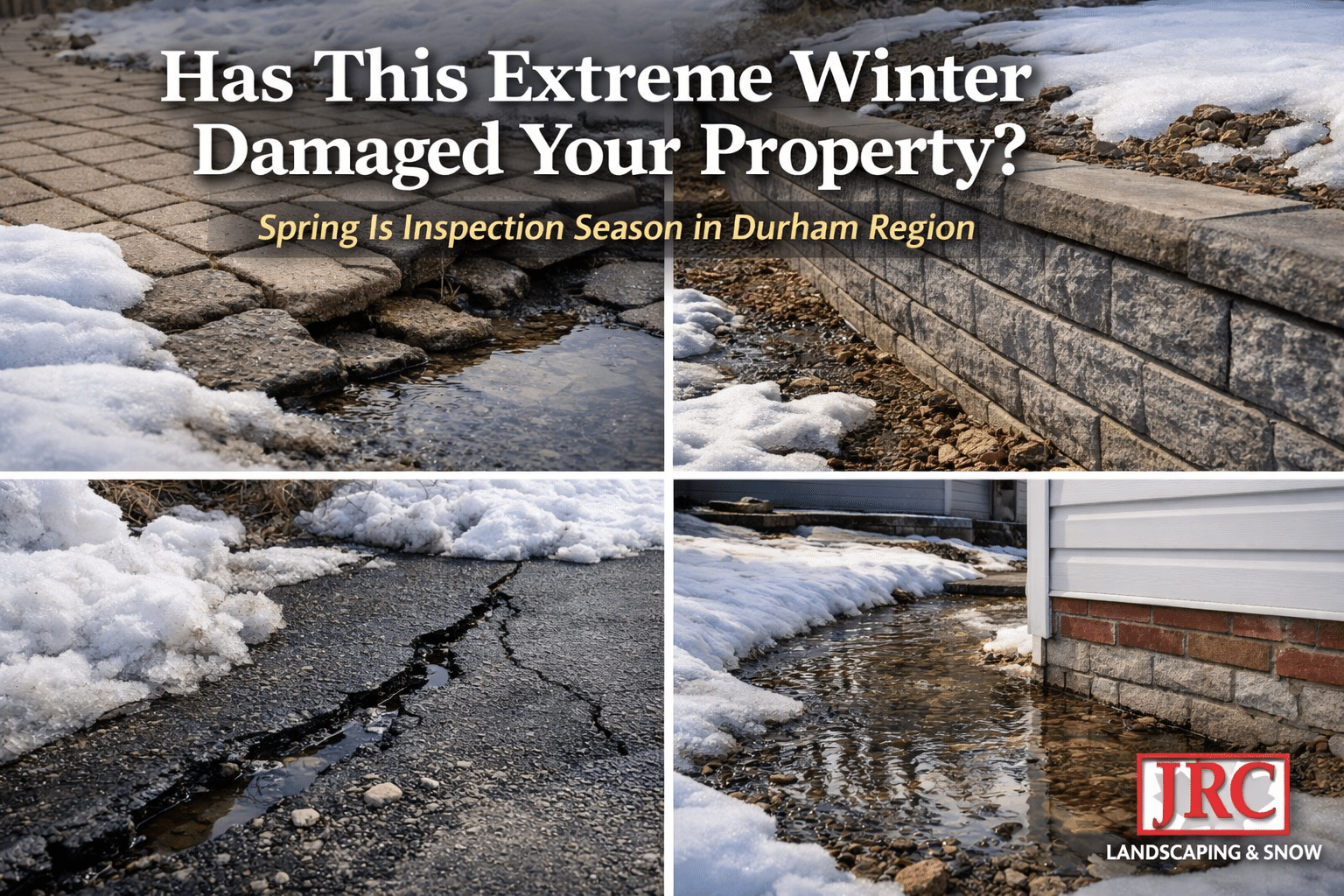
One of the most common signs of winter damage in Durham Region is movement in interlock surfaces.
If you notice uneven pavers, raised sections, widening gaps between stones or new areas where water collects, the base beneath the surface has likely been affected by freeze thaw cycles.
Moisture enters the base layer, freezes, expands and lifts the structure. When temperatures rise, the ground settles differently than before.
This type of movement is rarely just cosmetic…
Proper interlock repair typically involves lifting the affected area, correcting grading and drainage problems, rebuilding the base foundation and reinstalling the pavers so the system performs long term.
Well-built interlocking driveways and patios in Ontario are designed to tolerate minor seasonal movement without failing. However, when base preparation is insufficient, winter conditions will eventually expose those weaknesses.
Retaining Walls Showing Signs of Stress
Retaining walls throughout Durham Region work extremely hard during Ontario winters. They manage soil pressure, elevation changes and increased moisture loads created by melting snow and frozen ground conditions.
Property owners and property managers should watch for these warning signs:
- Leaning or bowing retaining walls
- Cracks forming in wall structures
- Separation between retaining wall blocks
- Soil washout or erosion behind the wall
These are structural indicators that the wall may be under excessive pressure or that drainage behind the wall has failed.
Addressing retaining wall problems early prevents larger reconstruction costs later.
Asphalt and Concrete Damage After Winter
Many residential driveways and commercial properties in Durham Region rely on asphalt or poured concrete for parking areas, drive lanes and walkways.
These materials are particularly vulnerable to Ontario winter conditions.
Because our crews were maintaining commercial properties across the region all winter long, we saw exactly where surfaces began to fail…
- Small cracks widened quickly.
- Low areas collected water and deteriorated faster.
- Edges broke down under repeated snow plowing and temperature swings.
- Eventually there comes a point where constant patching no longer provides good value.
- At that stage, many property owners begin considering interlocking driveway systems or upgraded hardscaping solutions that perform better under freeze thaw conditions.
Drainage Problems Revealed by Spring Snow Melt
Spring snow melt reveals drainage problems almost immediately. Common warning signs include:
- Standing water on driveways or walkways
- Saturated lawn areas that remain wet
- Erosion around garden beds and landscaped areas
- Water flowing toward building foundations
- Sinking ground near entrances or parking lots
- Drainage is one of the most important factors in long term landscape performance.
If water is not properly managed beneath the surface, every structure above it will eventually suffer damage.
Many landscaping repairs in Durham Region ultimately trace back to poor drainage design or inadequate base preparation.
Why Many Property Owners Choose Hardscaping Upgrades Instead of Repairs
After winters like this one, we often discuss with clients whether repairing existing surfaces makes sense or whether upgrading offers better long-term value.
Hardscaping projects such as interlocking driveways, natural stone steps, retaining walls and professionally designed outdoor living spaces consistently deliver strong results for properties across Durham Region.
Increased Property Value and Curb Appeal… First impressions matter.
- For homeowners, upgrading entrances, patios and driveways significantly improves curb appeal and perceived property value.
- For commercial and industrial properties, exterior condition reflects professionalism and attention to detail.
- Tenants, customers and visitors immediately notice well built outdoor spaces.
- Quality landscaping and hardscaping improvements create lasting visual and financial value.
Expanded Functional Outdoor Space
- Hardscaping improvements increase how a property can be used.
- A professionally designed patio creates additional outdoor living space.
- Walkways improve safety and accessibility.
- Retaining walls transform unusable slopes into functional property areas.
- For commercial properties, improved entrances and outdoor layouts enhance safety, accessibility and tenant experience.
Long Term Durability and Lower Maintenance Costs…
Properly installed interlocking systems perform exceptionally well in Ontario’s climate.
Unlike asphalt or poured concrete, interlocking pavers allow controlled movement during freeze thaw cycles without widespread cracking.
Individual stones can also be replaced without removing entire surfaces.
At JRC Landscaping and Snow, we place heavy emphasis on excavation depth, base preparation and drainage design because what happens below the surface determines long term performance.
Our goal is simple.
Build it once… and build it right.
What We Learned From Working Through This Winter
Because our team was providing commercial snow removal services across Durham Region throughout the winter, we were able to observe something very clearly…
- Properties built with proper excavation, drainage and base preparation held firm.
- Properties built with aging materials, shallow base foundations or poor drainage systems showed signs of stress quickly.
This real-world experience directly informs how we approach every landscaping and hardscaping project we build.
We design outdoor spaces to withstand Ontario winters, not just look good on installation day.
When Property Owners in Durham Region Should Call JRC
If you notice any of the following issues this spring, it may be worth having your property professionally assessed.
- Interlock displacement greater than one inch
• Retaining walls leaning or separating
• Water collecting near foundations or entrances
• Recurring asphalt cracking each year
• Walkways becoming uneven or unsafe
• Drainage problems appearing after snow melt
Early action often prevents much larger and more costly repairs later.
Built on Real World Experience
Justin began working professionally in landscaping in 2003 and founded JRC Landscaping and Snow in 2013 with one guiding principle.
Do the job right.
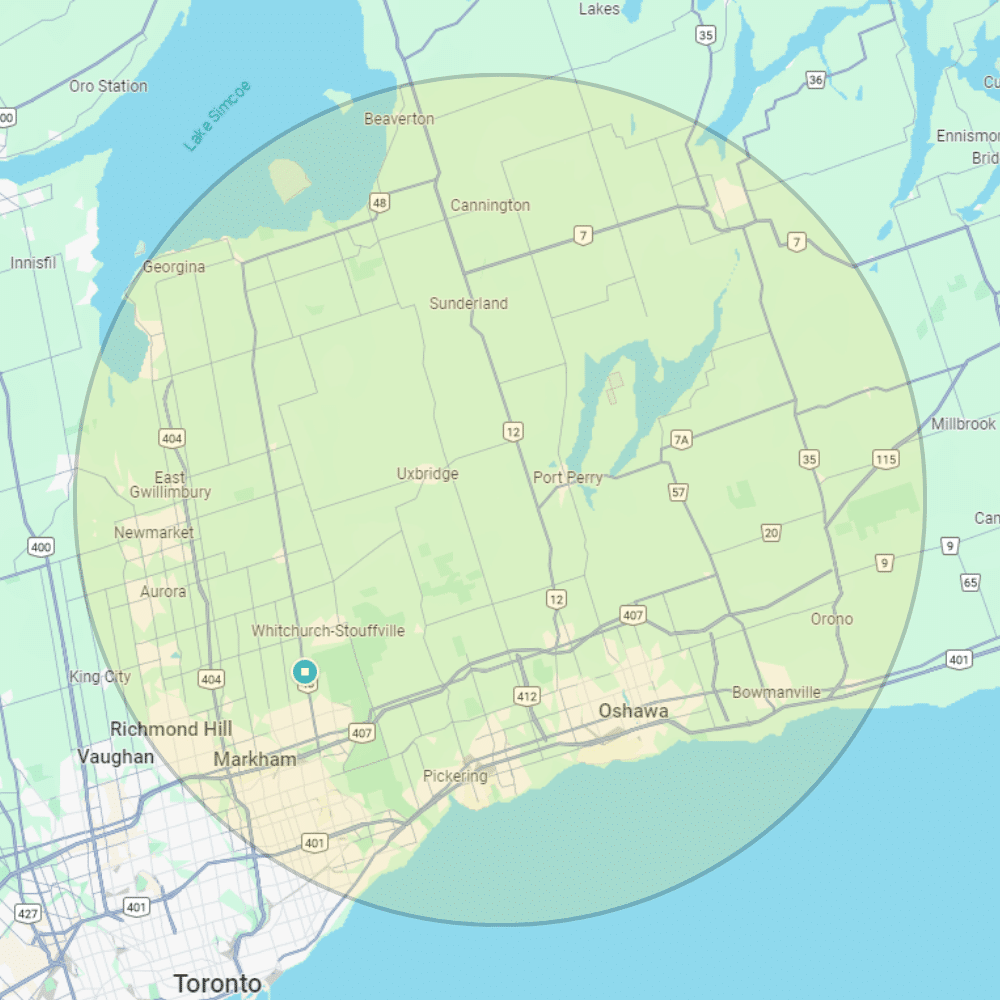
Serving both residential and commercial clients across Durham Region and the Greater Toronto Area allows us to see how outdoor construction performs year after year under real conditions.
That experience shapes how we design, build and repair every project.
Make the Smart Investment in Your Property
If this winter revealed shifting surfaces, cracks, drainage concerns or structural movement on your property, spring is the time to act.
Addressing issues early allows property owners to repair damage properly, upgrade materials and invest in outdoor spaces designed to perform long term.
Whether you oversee a residential property, commercial plaza or industrial facility in Durham Region, our team at JRC Landscaping and Snow is ready to help.
Make the smart investment in your property.
JRC = Job Done Right
Frequently Asked Questions About Winter Damage and Spring Property Repairs…
How do I know if winter caused structural damage to my landscaping?
Movement is usually the first indicator. Uneven interlock, leaning retaining walls or new pooling water often signal base or drainage problems beneath the surface. A professional inspection helps determine whether repair or reconstruction is the best long-term solution.
Is it better to repair asphalt or upgrade to interlock?
If asphalt requires repeated repairs each year, upgrading to interlock often provides stronger long-term value. Interlocking systems handle freeze thaw movement more effectively and allow localized repairs without replacing entire surfaces.
What return on investment do landscaping and hardscaping upgrades provide?
Well-designed hardscaping projects can add meaningful value by improving curb appeal, usability, and long term performance. The exact return depends on the type of upgrade, the condition of the property, and the surrounding market. Spring snow melt reveals drainage failures and structural movement clearly. Addressing issues early prevents additional deterioration and prepares the property to withstand future winters.
How can property owners reduce winter damage in the future?
Proper excavation depth, compacted granular base installation and effective drainage design, are the most important factors. Investing in quality construction dramatically reduces long term repair needs.
What People are Saying About JRC Landscaping